Understanding perfume
Perfume scent families explained
Scent families group perfumes by an overall impression, such as floral, woody, fresh or amber. They are a browsing map rather than strict boxes: a fragrance can combine several directions and different classification systems use different boundaries.
A HUME Fragrance buying guide
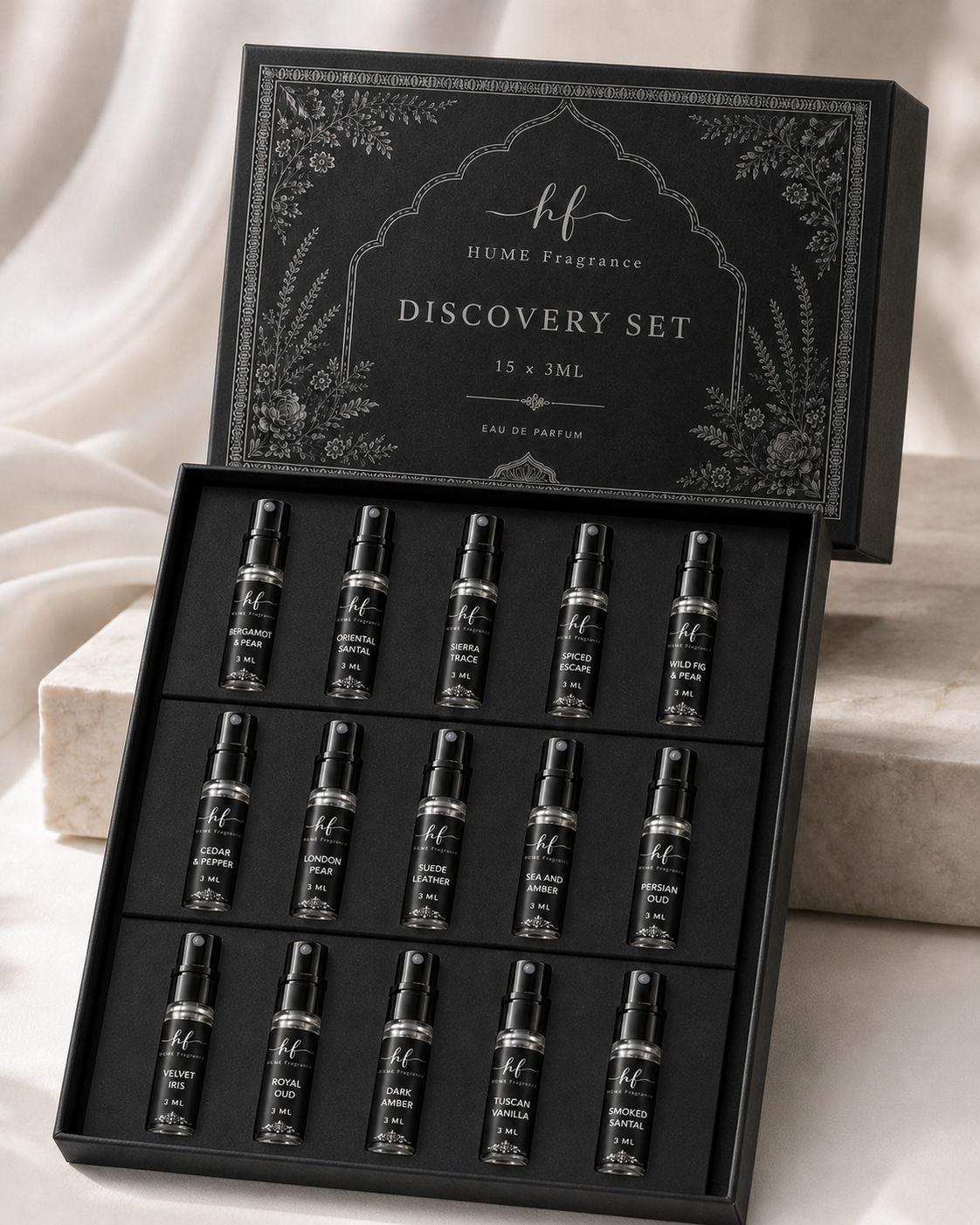
Use the overall impression
A perfume listing one rose note need not feel mainly floral. Consider the full smell and supporting notes before assigning it to the category that seems most useful to you.
Look for neighboring directions
A citrus-woody perfume can connect freshness with a drier later character. Mixed descriptions help explain those transitions without requiring you to choose one permanent family.
Choose contrasts to learn
Compare clearly different directions before exploring many similar products. Your preferences may cross family labels, and a family does not determine gender, quality or performance.
At a glance
| Direction | Useful starting references | Remember |
|---|---|---|
| Fresh | Citrus, green, marine or aromatic impressions | Fresh does not establish strength |
| Floral | Flower-like character | Can overlap with fruit, woods or warmth |
| Woody | Dry or smooth wood-like textures | Different woods suggest different effects |
| Amber | Warm, resinous or rounded impressions | A descriptive direction, not fossilized amber |
Try this before you buy
Compare one fresh, one floral and one woody description and write which overall direction you want to try first.