Understanding perfume
Perfume notes chart for beginners
A beginner perfume notes chart translates common note names into useful scent references. It is a vocabulary guide rather than a prediction engine: the surrounding composition changes how each note is perceived.
A HUME Fragrance buying guide
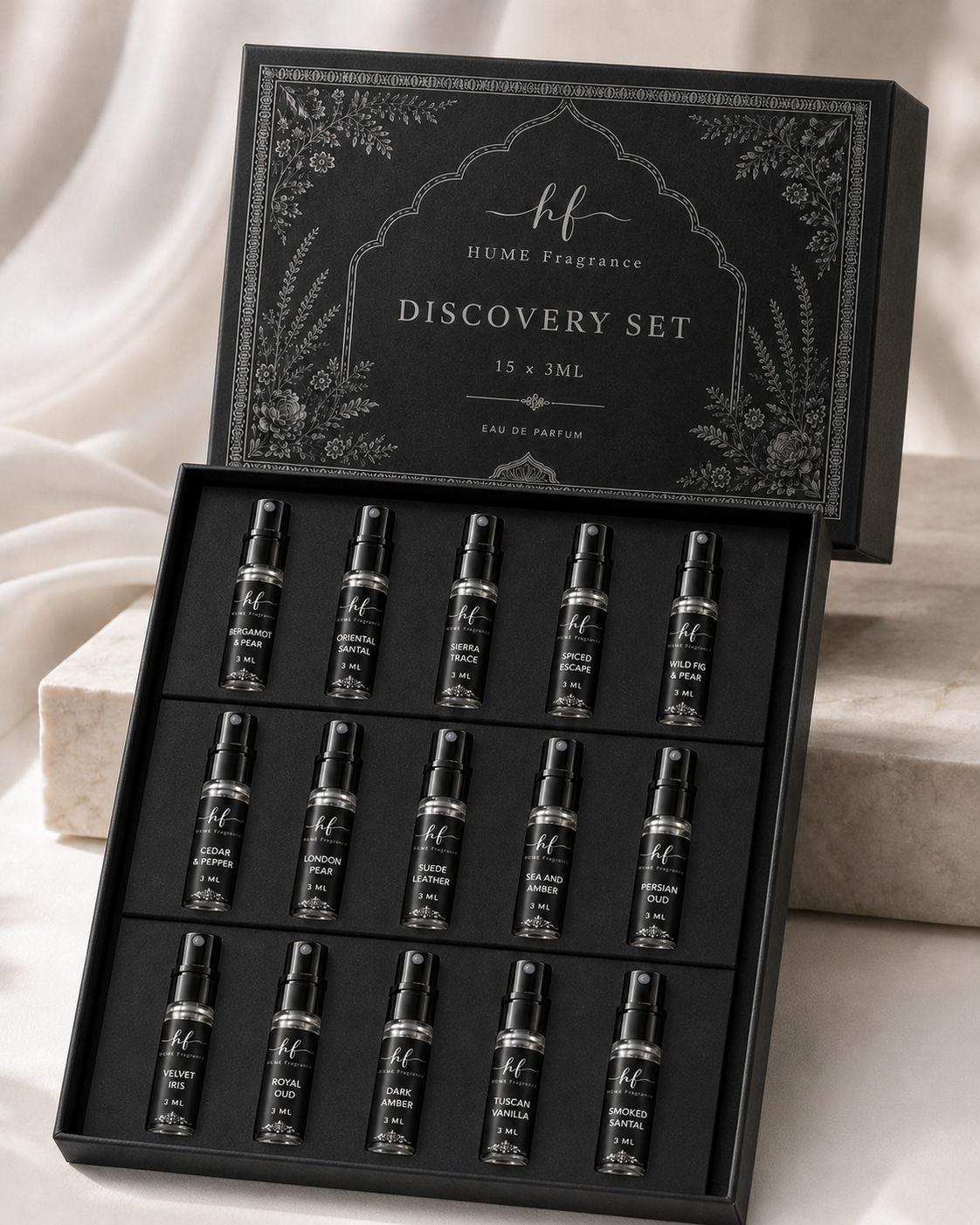
Use the chart to choose a direction
Start with familiar impressions and select a few notes you want to explore. Avoid treating one disliked example as proof that every perfume listing that note will be unsuitable.
Read beyond the reference word
A creamy sandalwood or earthy patchouli description is a starting association. It does not disclose ingredient sourcing or guarantee the note will dominate a fragrance.
Turn the chart into a record
Add your own words after testing a sample. The useful vocabulary is the language that helps you describe preferences consistently, not the number of technical terms you memorize.
At a glance
| Note | Possible scent references | Useful contrast to explore |
|---|---|---|
| Vanilla | Sweetness or rounded warmth | Dessert-like vs woody |
| Oud | Dark or resinous woods | Smooth woods vs incense support |
| Rose | Floral, sometimes powdery or fruit-like | Fresh petals vs warmer blend |
| Jasmine | Rich floral with varying facets | Citrus support vs warmer structure |
| Sandalwood | Smooth or creamy wood | Rounded vs drier texture |
| Musk | Clean, powdery or skin-like | Laundry-like vs warm |
| Bergamot | Bright, peel-like citrus | Opening brightness vs later warmth |
| Vetiver | Dry, earthy or grassy wood | Dryness vs smoky impression |
| Patchouli | Earthy, woody or warm depth | Floral support vs earthiness |
| Leather | Smooth, dry, smoky or suede-like | Soft texture vs sharper edge |
Try this before you buy
Choose two notes from the chart, predict their contrast and compare your own words after separate sample wears.